
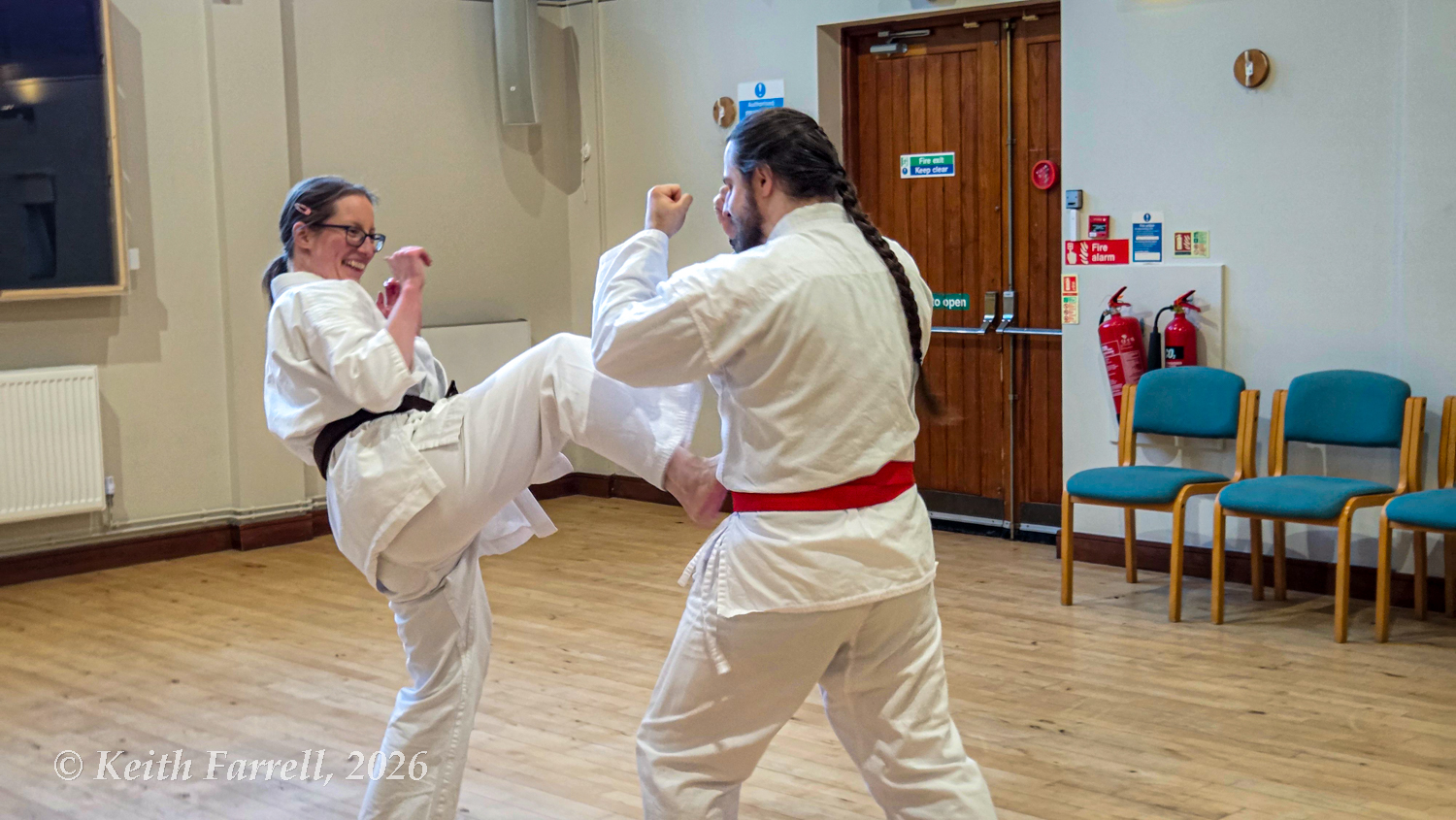
In 1938, Gichin Funakoshi published his 20 rules or niju kun (sometimes known as his precepts, instructions, or guiding principles) for karate in the book Karate-do Taikan.
The first of these rules was:
一、空手道は礼に始まり礼に終る事を忘るな
Hitotsu, karate-dō wa rei ni hajimari rei ni owaru koto o wasuruna
Do not forget that Karate-do begins and ends with Rei.
Rei is often translated as courtesy or respect, but because it is the Japanese word for the Confucian concept of Li, it can also include loyalty, decorum, propriety, or civilised behaviours in general. The rites and behaviours of Li or Rei include all the ways that people interact with each other in a way that sustains healthy and appropriate relationships.
The ways by which Li or Rei can be shown between people can change over time, as different ways of maintaining relationships or showing appropriate mutual respect become more common or expected. For this reason, while in our club we do bow to show respect to each other in the Japanese fashion, we also acknowledge that we are 21st century people in the UK, and there may be other more appropriate ways to show respect to each other than by holding tightly to the social norms of another country and another time – for example, I prefer to be called by my name rather than being addressed as Sensei.
Additionally, we need to run our sessions in the venue in which we meet, along with other people and groups. We should look after our space and leave it at least as tidy as how we found it. And since other people and groups use the venue at the same time as us, we should do our best to co-exist with them so that everyone can do their activities in peace without being distracted or annoyed with each other. For this reason, we do not stamp loudly or shout a kiai or osu as we practise, we simply get on with practising in a quiet and respectful fashion, so that we do not disturb anyone else using the venue at the same time. We can be good tenants and good neighbours while practising karate and I believe that this is an entirely appropriate reading of the first of Funakoshi’s rules.
We can certainly bow before and after an exercise or session, so that our karate does literally begin and end with Rei. But we can (and should) also do our best to maintain healthy and appropriate relationships within the club and with other people.
Further reading
https://en.wikipedia.org/wiki/Nijū_kun
https://www.karatephilosophy.com/the-twenty-precepts-of-karate-and-their-meaning/
https://www.wskf.com.au/martial-arts-concepts/the-twenty-precepts-of-karate-do/
https://en.wikipedia.org/wiki/Li_(Confucianism)
https://www.karatephilosophy.com/do-not-forget-that-karate-do-begins-and-ends-with-rei/